Sithonia
Where to stay on Sithonia
Five villages, five different holidays — including the one we would steer you away from.
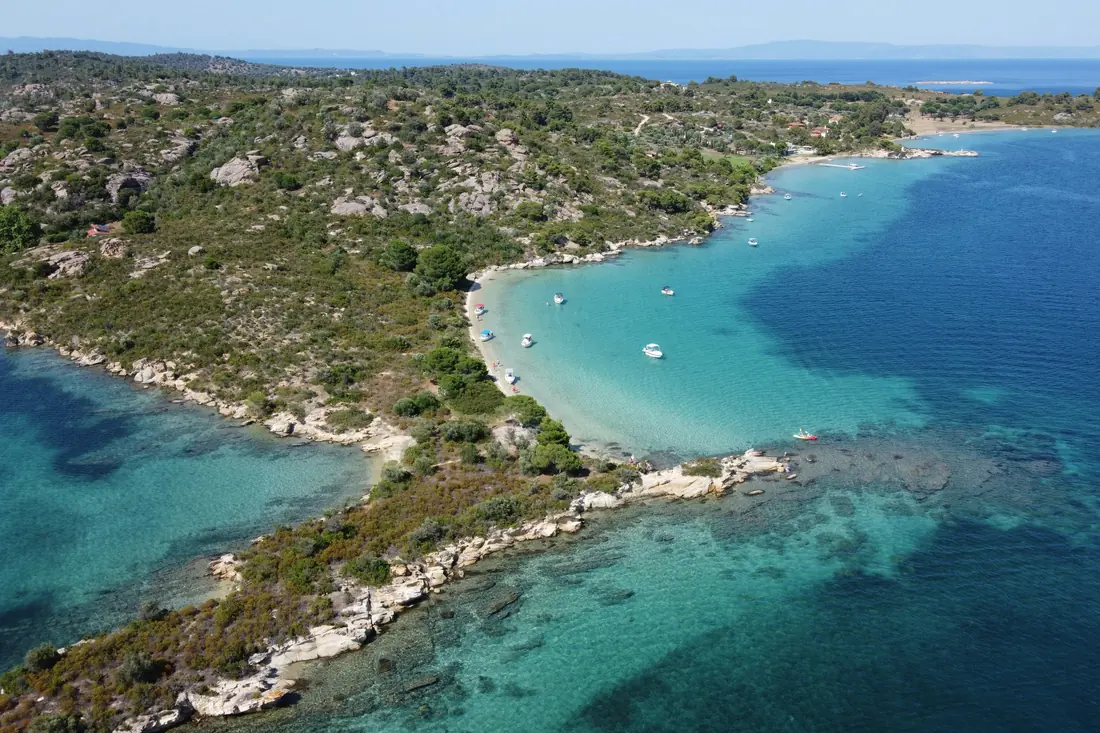
Sithonia
Five villages, five different holidays — including the one we would steer you away from.
Sithonia is the middle of Chalkidiki's three fingers, some fifty kilometres long, with a single main road running round the outside. The full loop takes three to four hours without stopping. That sounds like "everything is reachable from anywhere" — it is not, once you have to drive back in the evening.
So where you sleep shapes the holiday more than the map suggests. Here are the five places worth considering, each with what argues against it. We are building in Nikiti ourselves — which makes it all the more important to say plainly when somewhere else is the better answer.
| Village | Character | Suits | Less so if |
|---|---|---|---|
| Nikiti | a real village, lived in year round | families, a base for the whole peninsula | you are after clubs and long nights |
| Neos Marmaras | developed resort town | infrastructure, evenings out, shelter from the wind | you want quiet and Greece without the frame |
| Vourvourou | scattered settlement on shallow bays | boats, kayaks, island-hopping to Diaporos | you have to manage without a car |
| Sarti | east coast, long sandy beach | views of Athos, wide beaches, a younger crowd | wind is an issue for you |
| Toroni | quiet, south-west, ancient remains | snorkelling, clear water, very little bustle | you want somewhere to walk to after dark |
It is not "which beach is prettiest". It is: how much does wind bother you?
From late June to early September the Meltemi blows across the Aegean, strongest in July and August. It is a northerly, it picks up in the late morning, peaks in the early afternoon and drops away after sunset. On Sithonia it hits the north- and north-east-facing coasts hardest. The western side around Neos Marmaras is more sheltered; Nikiti, on the north-west, sits between the two and usually has manageable conditions.
In practice: if you are travelling with small children and do not like waves, stay on the western side and drive east on calm days — not the other way round. Mornings are calmer everywhere.
01
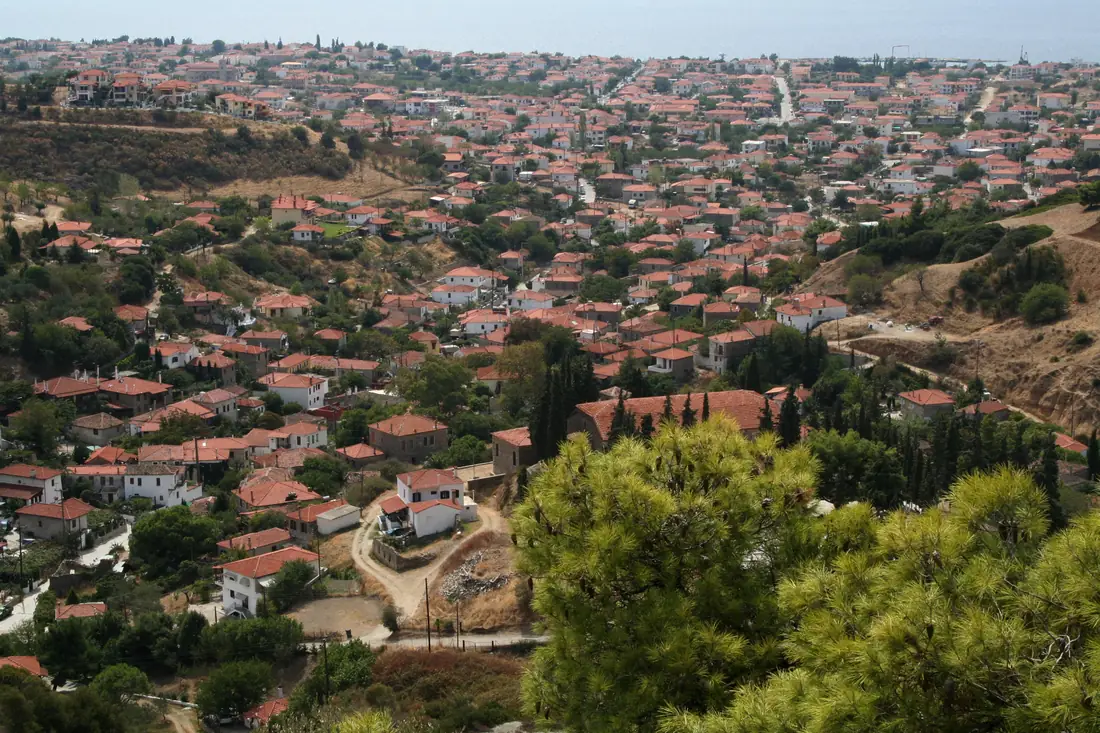
Nikiti has around 2,900 permanent residents and roughly 20,000 in summer. That range is the point: there is a population here that stays when the season ends — a school, doctors, a market, trades. You can feel it. The place was not built for the summer; the summer was added to it.
It falls into two halves: the old village on the hill and the newer part by the water, with a promenade, tavernas and a marina built in 2015. The village beach is broad, sandy and shallow. Economically Nikiti lived for a long time on olives and beekeeping — it counts as one of Europe's most significant honey-producing towns. Friday morning is market day.
02
The most built-up resort town on the peninsula, with the Porto Carras complex on its doorstep — host of an EU summit in 2003. There is more of everything here: shops, restaurants, bars, organised beaches, watersports.
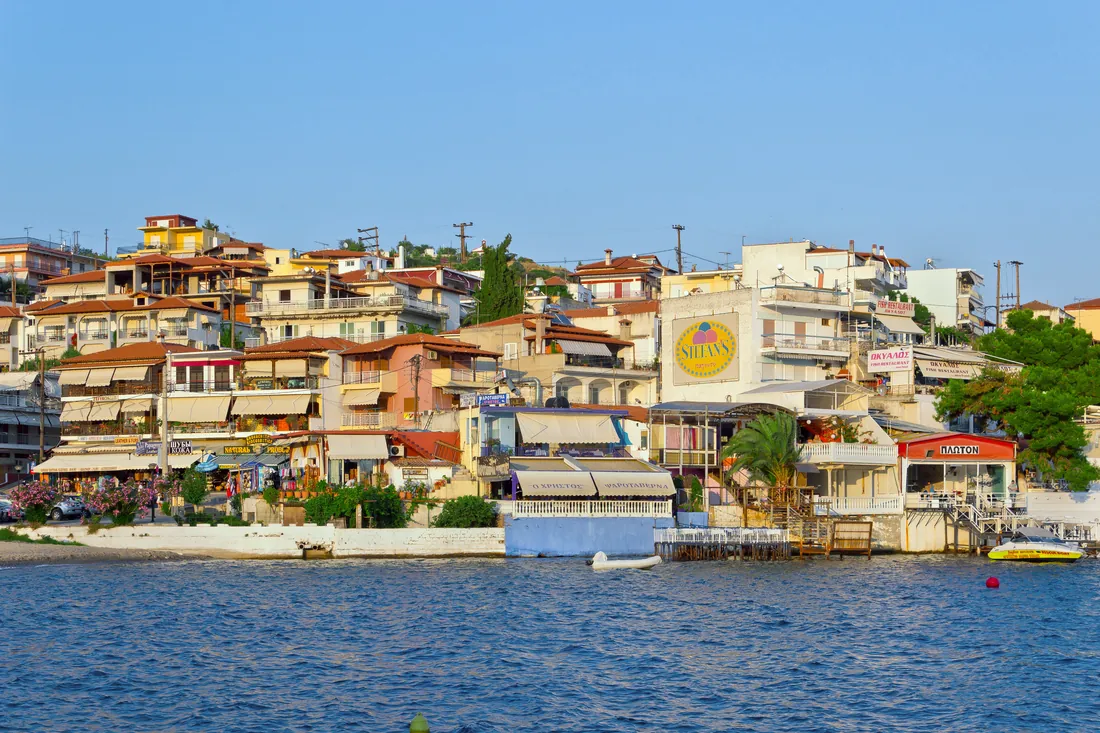
Its position on the western side is more sheltered than the east coast, which is a real argument in high summer. Five kilometres above it lies Parthenonas, a mountain village of restored 19th-century stone houses — the opposite of the town below.
03
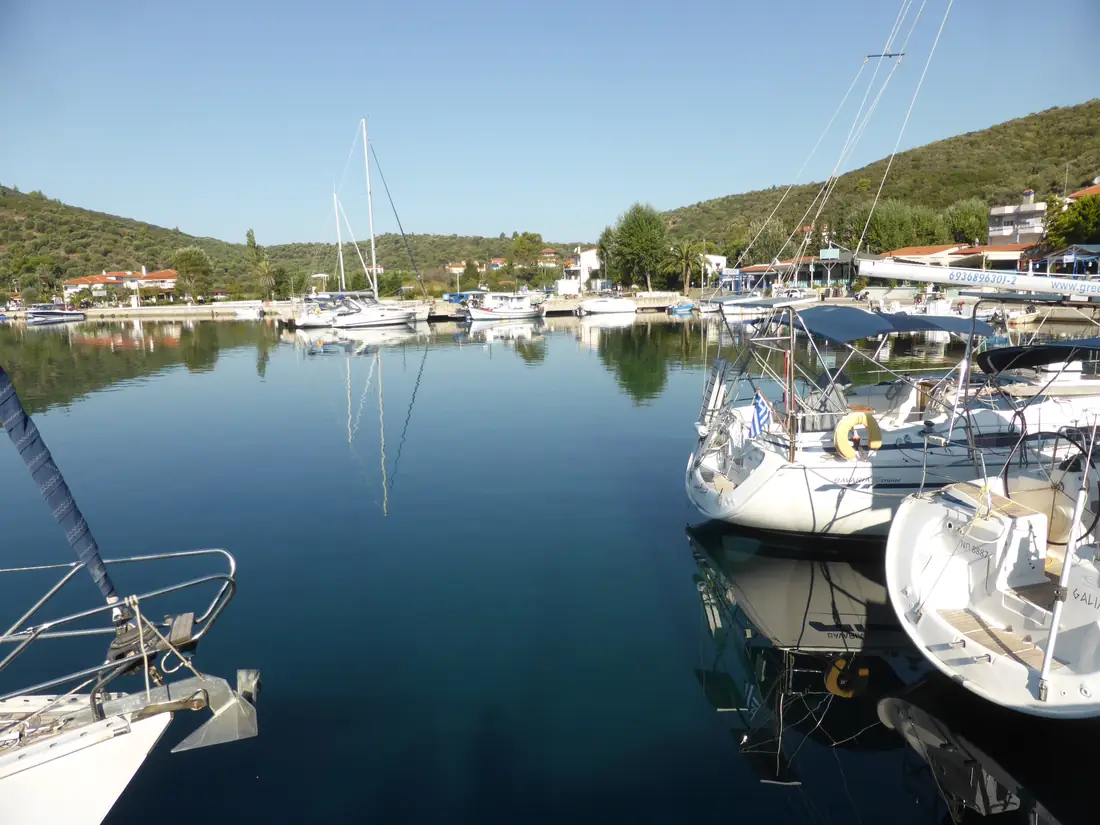
Not a village in the usual sense but a loose scatter of houses along a chain of shallow turquoise bays. Offshore lies the island of Diaporos, with sheltered coves reachable only from the water; boats can be hired along the shore road. Full-day trips and the cruises along the Athos coast leave from nearby Ormos Panagias.
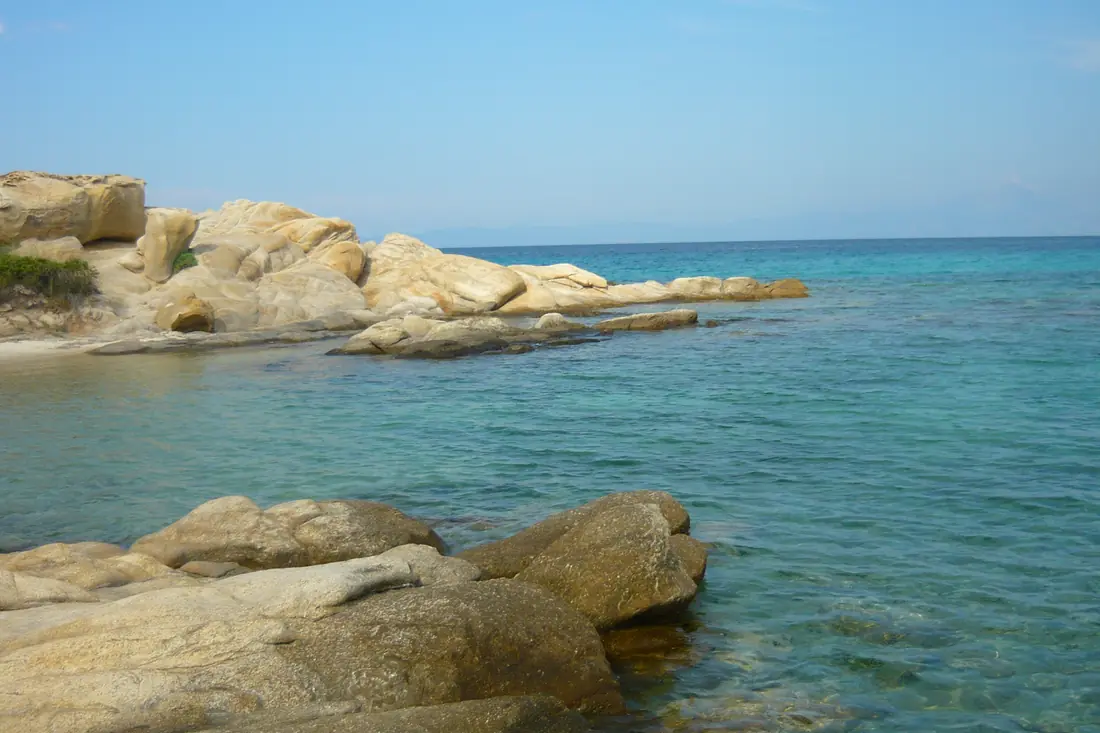
For snorkelling, kayaking and days on the water this is the best base on the peninsula. If you would rather walk to a choice of tavernas in the evening, there is less here than in Nikiti or Neos Marmaras.
04
The east coast's most popular resort, with a long, wide sandy beach — and the view many people come to Sithonia for in the first place: from the beach and the surrounding hills, Mount Athos rises across the Singitic gulf. The village was founded after 1923 by Greek refugees and is correspondingly young.
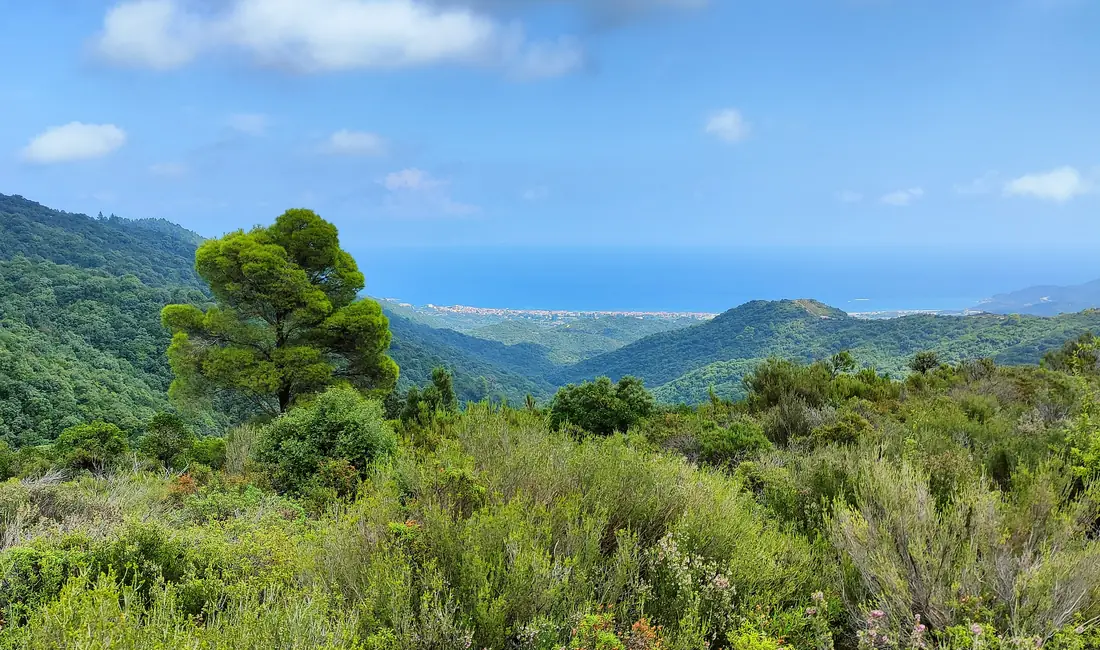
05
Toroni lies in the south-west, with ancient ruins at the water's edge and clear, calm water for snorkelling. Nearby is Porto Koufo — the largest natural harbour in Greece, mentioned by Thucydides and used by German submarines in the Second World War. Today a fishing village, well regarded for its fish tavernas.
The south is the quietest part of Sithonia. That is both its appeal and its limitation: from the end of the peninsula everything else is a longer drive, and nothing here works without a car.
Eight beaches on Sithonia carry the Blue Flag, spread right across the peninsula — from Lagomandra and Porto Carras in the west to Sarti, Sykia and Platanitsi in the east. Choosing a base on that basis alone is not worth it.
If Nikiti is the right answer.
A maisonette in the Avaton Complex, six hundred metres from the sea, with its own gym. Opening summer 2027, booked direct with the host.
Discover the suite Still weighing it up? The beaches and getting here may help.